
When dealing with a dog who lunges at bicycles, barks frantically at the window, or spins in hyper-arousal at the sound of the doorbell, our immediate instinct is to look at training. We think about commands, counter-conditioning, and behavior modification.
But what if the root cause of your dog’s hyper-reactivity isn’t just in their head? What if it’s starting in their gut?
In recent years, veterinary behaviorists and researchers have turned their attention to a fascinating biological highway: the gut-brain axis. This two-way communication system links your dog’s central nervous system directly to their gastrointestinal tract. It turns out that a balanced digestive ecosystem is one of the most powerful, overlooked tools we have for building a calm, resilient mind at the other end of the leash.
The Biological Highway: How the Gut Talks to the Brain
Your dog’s gastrointestinal tract is home to trillions of microbes collectively known as the microbiome. Far from just breaking down dinner, these tiny organisms act as a secondary control center for systemic wellness.
The gut and brain communicate constantly via the vagus nerve, a major cranial nerve running directly between the brainstem and the abdomen.
Neurotransmitter Factories
A staggering amount of your dog’s neurotransmitters—the chemical messengers that dictate mood—are produced right in the gut. For instance, a vast majority of the body’s serotonin (the chemical responsible for regulating mood, emotional stability, and feelings of calm) is manufactured by gut bacteria, not the brain.
The SCFA Calm Network
When beneficial gut microbes feast on prebiotic fibers (like plain sweet potatoes or oats), they ferment them into short-chain fatty acids (SCFAs). These SCFAs travel through the bloodstream, cross the blood-brain barrier, and help reduce systemic neural inflammation, lowering a dog’s base stress level.
The Vicious Cycle of Stress and Inflammation
When a dog’s microbiome falls out of balance—a state known as dysbiosis—the beneficial bacteria disappear, allowing opportunistic, harmful bacteria to multiply.
This bacterial imbalance compromises the tight junctions of the intestinal wall, leading to a hyper-reactive immune response and systemic inflammation. This inflammation travels straight up the highway to the brain, manifesting outwardly as behavioral instability.
Lowered Thresholds
A dog with a chronically inflamed gut will possess a much lower threshold for stress. Things that a healthy dog might dismiss—like a distant barking dog or a passing garbage truck—suddenly trigger a massive, explosive reaction.
Elevated Cortisol
Gastrointestinal discomfort triggers the release of stress hormones like cortisol and adrenaline. A dog swimming in stress hormones simply cannot remain in a learning state during training sessions.
The Feedback Loop
To make matters worse, behavioral stress itself damages the gut. A high-stress event triggers chemical changes that actively kill off beneficial gut bacteria, creating a frustrating loop where anxiety causes gut issues, and gut issues fuel further anxiety.
Outward Signs of an Internal Imbalance
As a dog coach, I frequently see dogs labeled as “stubborn” or “untrainable” when they’re actually suffering from internal dysbiosis.
Look for these common physical signs alongside behavioral reactivity or mouthiness:
* Intermittent loose stools or unexplained gas
* Eating grass compulsively or licking floors/walls
* Frequent lip-smacking or acid reflux signs
* Dull coat or subtle skin irritations
Beyond Training: Feeding the Mind
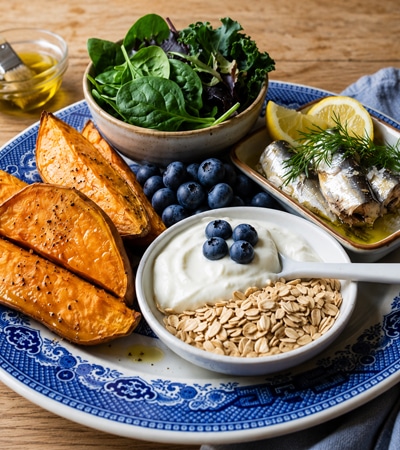
When working with a fearful, anxious, or highly reactive dog, behavior modification plans are only half the battle. To support the nervous system we need to optimize the bowl.
By introducing species-appropriate, whole-food prebiotics to fuel good microbes, and raw live cultures to introduce beneficial strains, we can actively influence the neurotransmitters traveling up the vagus nerve.
Lasting behavior change is a holistic process. When we combine positive reinforcement coaching with a biologically appropriate, gut-healing protocol, we stop merely managing the symptoms of reactivity—we heal the underlying system from the inside out.